
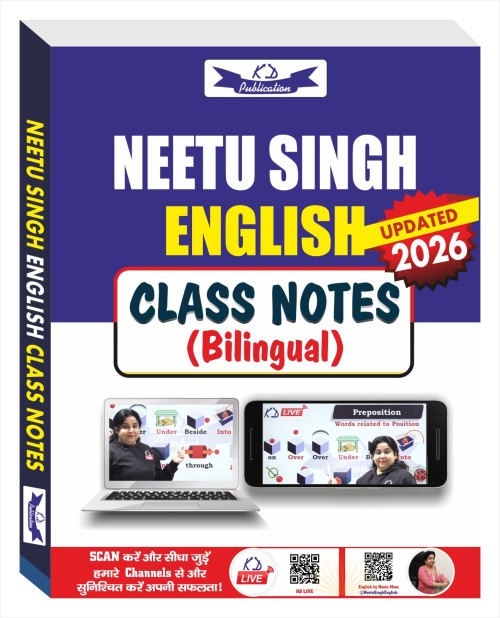
MRP (Inclusive of taxes) : ₹650.00
** GST Invoice available for businesses
2. VERB
3. TENSE
4. SENTENCE
& TYPES
5. QUESTION TAG
6. CONDITIONAL
SENTENCES
7. SUBJECT VERB
AGREEMENT
8. CAUSATIVE
VERBS
9. MOOD
10. INVERSION
11. INFINITIVE
& GERUND
12. PARTICIPLE
13. PASSIVE VOICE
14. NARRATION
15. NOUN
16. PRONOUN
17. ADJECTIVE
18. ADVERB
19. CONFUSING
ADVERBS & ADJECTIVES
20. ARTICLE
21. DETERMINERS
22. PREPOSITION
23. FIXED
PREPOSITION AND EXERCISE
24. PHRASAL VERB
25. CONJUNCTION
26. PARALLELISM
27. MODALS
28. SUPERFLUOUS
EXPRESSION
29. SPELLINGS
31. LEGAL TERMS
In 2023, one of her public installations—a line of child-sized shrouds made of gauze and coffee stain, hung along a stretch of fence in Sunland Park, New Mexico—was vandalized twice. Both times, the community repaired the pieces, adding their own stitches to the fabric. For Ibarra, this was not a defeat, but a confirmation of her process. "The art is not the object," she says. "The art is the act of caring for the object." Currently, Ibarra is at work on her most ambitious project to date: "The Undrowned." This multi-year endeavor focuses on climate displacement along the Gulf Coast and the border of South Texas, linking the history of indigenous land loss to modern climate refugees. The project will culminate in a floating installation of lanterns and sound recordings on the Rio Grande in 2026.
In a contemporary art world often polarized between raw political activism and detached conceptualism, Alicia Williams Ibarra emerges as a singular voice. She is not easily categorized. Part documentarian, part ritualist, and part community organizer, Ibarra has carved out a space where the personal becomes historical, and where the aesthetic act is inseparable from healing. alicia williams ibarra
To understand her work is to understand the geography of the U.S.-Mexico borderlands—not just as a physical line on a map, but as a living, breathing ecosystem of memory, loss, and resilience. Born and raised in El Paso, Texas, and culturally rooted in Ciudad Juárez, Ibarra’s identity is intrinsically bi-national. Her family history is steeped in the fabric of the Rio Grande Valley, with ancestors who were farmers, midwives, and storytellers. This lineage is crucial; Ibarra often refers to her work as “an archaeology of the present,” where she digs through layers of colonialism, industrialization, and forced migration to unearth the narratives that official history leaves behind. In 2023, one of her public installations—a line